
Garage Door Won't Close? 7 Common Causes and What to Do
Most of the time it's something simple, like the safety sensors. Here's what to check first, and when to stop and call.
Safety first
Before you try anything, look at the door itself. If the door is hanging crooked, one side is lower than the other, a cable is loose or a spring has a visible gap, don't keep running it. Springs and cables hold a lot of tension and can cause serious injury.
Only pull the red emergency release cord when the door is fully closed. If a spring is broken, the opener may be the only thing holding the door up, and pulling the cord with the door open can make it drop fast.
If the door looks normal, the checks below are safe to try.
1. The safety sensors are blocked, dirty or out of line
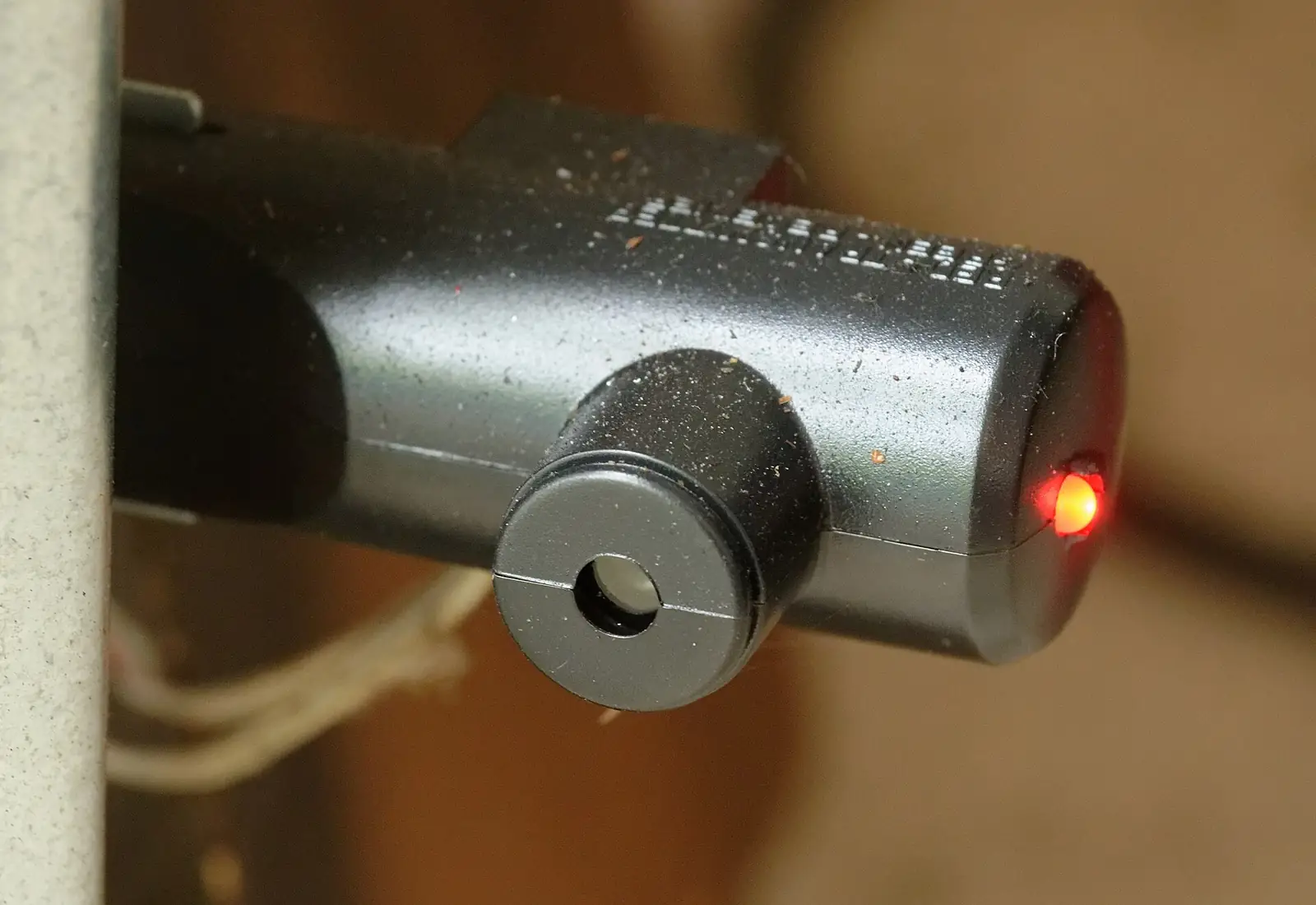
This is the most common reason a door won't close. Every opener made since 1993 has safety sensors (photo eyes) near the floor on each side of the door. If the beam between them is blocked, the door stops and goes back up, and the light on many openers blinks.
- Move anything in the path: trash cans, boxes, leaves, a toy.
- Wipe both lenses with a soft cloth.
- Check that the small lights on both sensors are on and steady. If one is off or flickering, gently aim it until it's solid.
- Look for loose or chewed wires running to the sensors.
- Bright, low sun shining straight into a sensor can also confuse it.
Only closes if you hold the wall button?
That's a sign the sensors aren't working. Many openers let you close the door by holding the button down as a backup, but the sensors still need fixing.
2. It closes, then goes back up
If the door reaches the floor or gets close and then reverses, the cause is usually one of these:
- The close travel limit is set too far, so the opener "thinks" it hit something when it reaches the floor.
- Something is making the door bind, like a bent track or worn rollers.
- An object or the sensors (see #1).
Check that the door moves smoothly by hand before anyone adjusts the opener's settings. Turning up the force to push past a problem can hide a door issue and make the door less safe.
3. The remote doesn't work, but the wall button does
- Replace the remote battery.
- Check whether the wall control's lock (vacation) mode is on. It blocks remotes.
- The remote may need to be reprogrammed to the opener.
4. The opener hums or strains but the door won't move
This is often a broken spring. The springs do the heavy lifting, not the opener. With a broken spring the door is too heavy for the opener. Other causes are a locked manual door lock or a worn-out motor.
Stop running the opener if it's straining. Repeated tries can damage it.
5. The motor runs but the door doesn't move
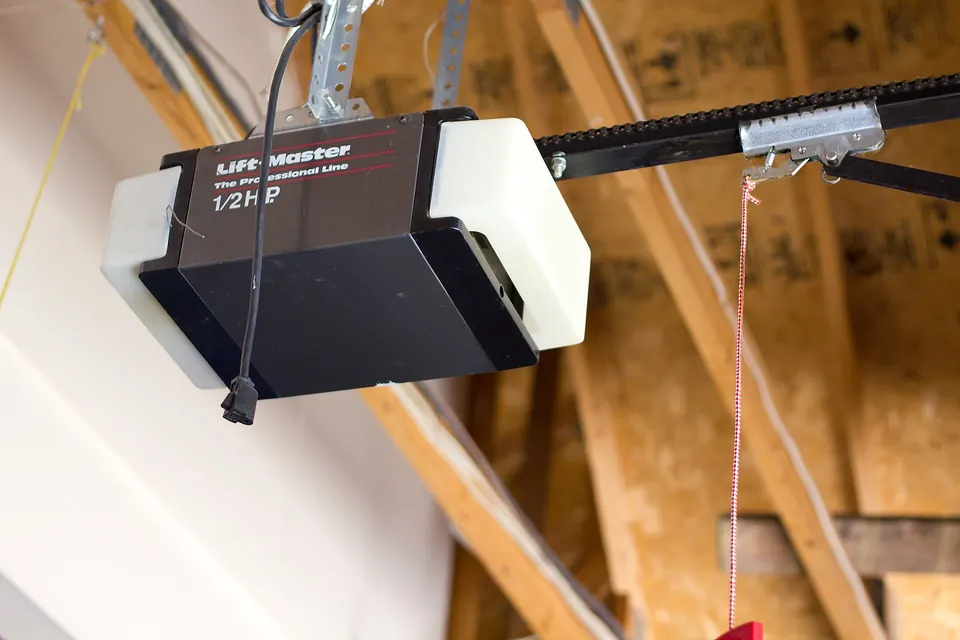
- The opener may be disconnected from the door (someone pulled the red emergency release cord). With the door fully closed, it usually reconnects the next time you run the opener. If the door is open and disconnected, don't try to move it yourself. Call us.
- On older Chamberlain and LiftMaster openers, a worn plastic drive gear inside the opener is a common cause.
6. The door is off track or binding
If the door jerks, rubs, or a roller has come out of the track, the track may be bent or the rollers worn. A door that's off its track is under spring tension and can fall. This is a job for a professional.
7. No power
Check that the opener is plugged in, the breaker is on, and any GFCI outlet in the garage hasn't tripped.
When to call
Call a professional if:
- A spring is broken or you heard a loud bang from the garage.
- A cable is loose, frayed or off its drum.
- The door is crooked or off its track.
- The opener strains, grinds or won't respond after the checks above.
- The door won't close and you can't secure your home.
GGS offers 24/7 emergency service across Bryan–College Station. After-hours calls carry a flat $200 emergency fee, and you get an upfront quote before any work begins.
Do this monthly
Lay a 2×4 flat on the floor where the door closes. The door must touch it and go back up. Then wave an object through the sensor beam while the door is closing; it should reverse. If either test fails, have the opener checked.
Related services
Top photo: Jud McCranie, CC BY-SA 4.0, via Wikimedia Commons
Common Questions
Why does my garage door go down and then back up?
Usually the safety sensors are blocked, dirty or out of line, or the close limit is set too far. Check the sensors first; if the door still reverses, have the door and opener checked.
Why is the light on my garage door opener blinking?
On many openers, a blinking light means the safety sensors aren't seeing each other. Clear the path, clean the lenses and line them up until both sensor lights are solid.
Can I close my garage door by hand?
Don't pull the red emergency release cord unless the door is fully closed. With the door open, it can drop, especially if a spring is broken. If your door is stuck open, call for help instead.
Door still won't close? Call GGS 24/7.
Gabriel answers his own phone. Call (979) 587-6320 or book online.