
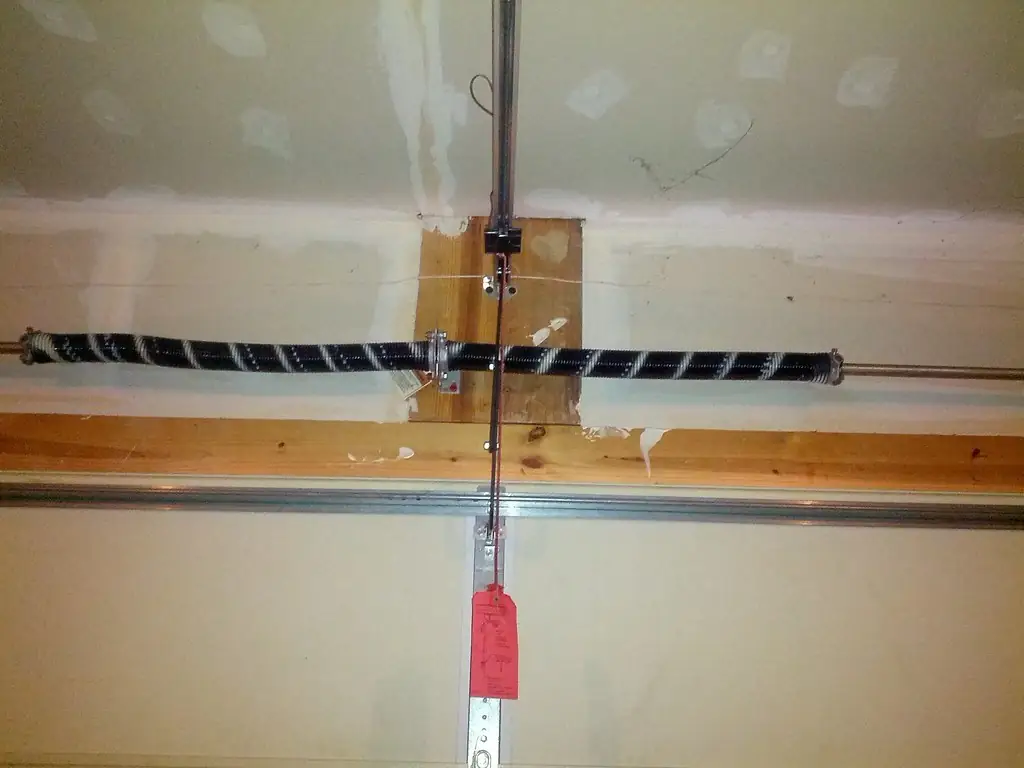
Torsion vs Extension Garage Door Springs
How to tell which springs your door has, how they work, and what to know when one breaks.
Which springs does your door have?
Stand inside the garage with the door closed and look up.
- A spring (or two) on a metal bar right above the door? Those are torsion springs.
- Long springs running along the ceiling tracks on each side of the door, parallel to the tracks? Those are extension springs.
Most newer doors use torsion springs. Extension springs are common on older and lower-cost doors and in garages with little room above the door.
How torsion springs work
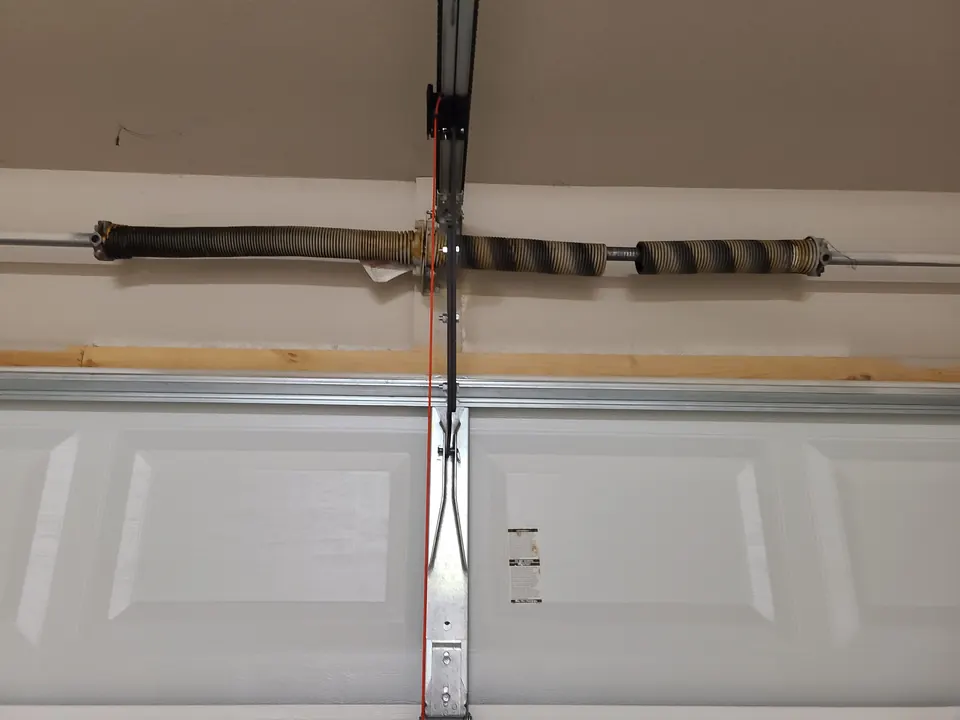
Torsion springs slide over a steel shaft mounted above the door. When the door closes, cables wrapped around drums at each end of the shaft twist (wind) the springs and store energy. When the door opens, the springs unwind and do the lifting.
- Smoother and more balanced lift
- Longer-lasting in many cases, and easy to upgrade to high-cycle springs
- Safer when they break, because the spring stays on the shaft
- Need roughly a foot of room above the door
How extension springs work
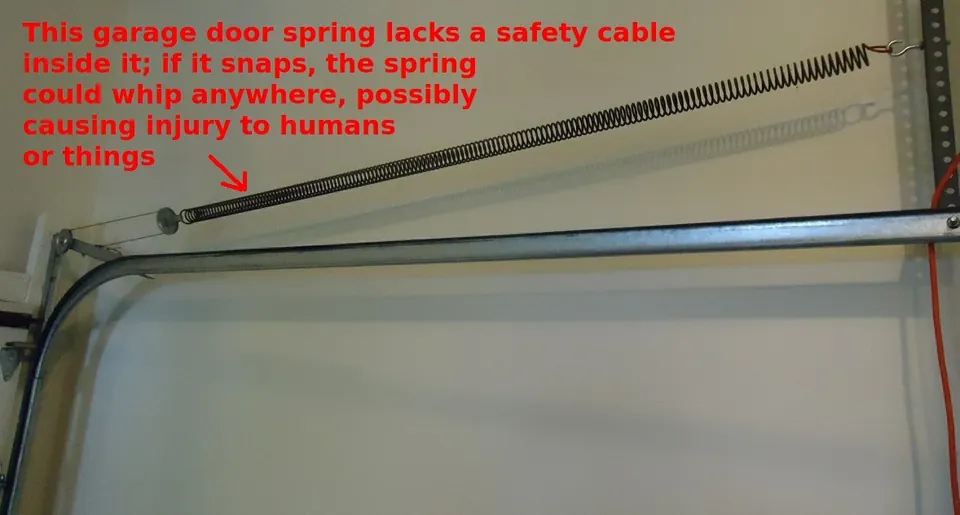
Extension springs stretch along the horizontal tracks as the door closes and pull it back up through pulleys and cables as it opens. They always work as a pair, one on each side.
- Lower cost and need less room above the door
- Can be jerkier and are harder to keep balanced
- Need safety cables. A cable should run through the middle of each spring so a broken spring can't fly across the garage. Many older installs don't have them.
Comparison
| Torsion springs | Extension springs | |
|---|---|---|
| Where they are | On a bar above the door | Along the tracks on each side |
| How they lift | Twist and unwind | Stretch and contract |
| Ride | Smoother, more balanced | Can be jerkier |
| When one breaks | Stays on the shaft | Can whip loose without a safety cable |
| Typical life (standard spring) | About 10,000 cycles | About 10,000 cycles |
| Headroom needed | About 12 inches | Less |
How long do they last?
Standard springs of either type are rated for about 10,000 cycles (one open plus one close). At about four cycles a day, that's roughly seven years. High-cycle torsion springs, made with heavier wire, last much longer. We offer them, though they may need to be ordered and installed at a later date. See how long garage door springs last.
When one breaks, replace both
Both springs on a door have done the same number of cycles, so when one breaks the other is usually close behind. Extension springs must always be replaced as a pair. On a two-spring torsion door, replacing both is highly recommended.
Can extension springs be converted to torsion?
Often, yes. GGS converts extension-spring doors to torsion springs when there's enough headroom above the door (about a foot). A conversion gives a smoother, safer, better-balanced door. We'll check your headroom and the door's condition and tell you whether it's worth it.
Don't do it yourself
Both kinds of springs hold enough energy to cause serious injury. Torsion springs have to be wound with proper winding bars, and extension springs have to be matched to the door's weight. If a spring is broken, stop using the door, and only pull the red emergency release cord when the door is fully closed. See garage door spring repair.
Torsion and Extension Spring Questions
Which is better, torsion or extension springs?
Torsion springs are generally smoother, more balanced and safer when they break. Extension springs cost less and need less headroom. Both do the job when they're sized correctly.
How do I know if my extension spring is broken?
You may see a spring that's stretched out, snapped in two, or hanging loose, and the door will go up crooked or feel very heavy.
Do extension springs need safety cables?
Yes. A safety cable through the center of each spring keeps a broken spring from flying across the garage.
How much does garage door spring replacement cost?
Most spring replacements with GGS run $350 to $500, depending on the type and size of spring, whether one or both are replaced, and the door's weight. After-hours emergency calls add a flat $200 fee.
Broken spring?
Call or text (979) 587-6320. 24/7 emergency service across Bryan–College Station.