
Why Is My Garage Door So Loud?
The sound your door makes is a clue. Here's what squeaking, grinding, rattling and banging usually mean, and what to do about each.
Match the noise to the cause
| What you hear | Most likely cause |
|---|---|
| Squeaking or squealing | Dry or worn hinges, rollers or bearings |
| Grinding | Worn roller bearings, or a bent or misaligned track |
| Rattling | Loose hinges, brackets or track bolts |
| Slapping or clanking from the opener | A loose chain on a chain-drive opener |
| Popping or creaking | Dry springs, or a door that's out of balance |
| Humming or whining from the opener | Worn opener gears, or an opener struggling with a heavy door |
| A single loud bang | Often a broken spring. Stop using the door. |
1. Worn rollers
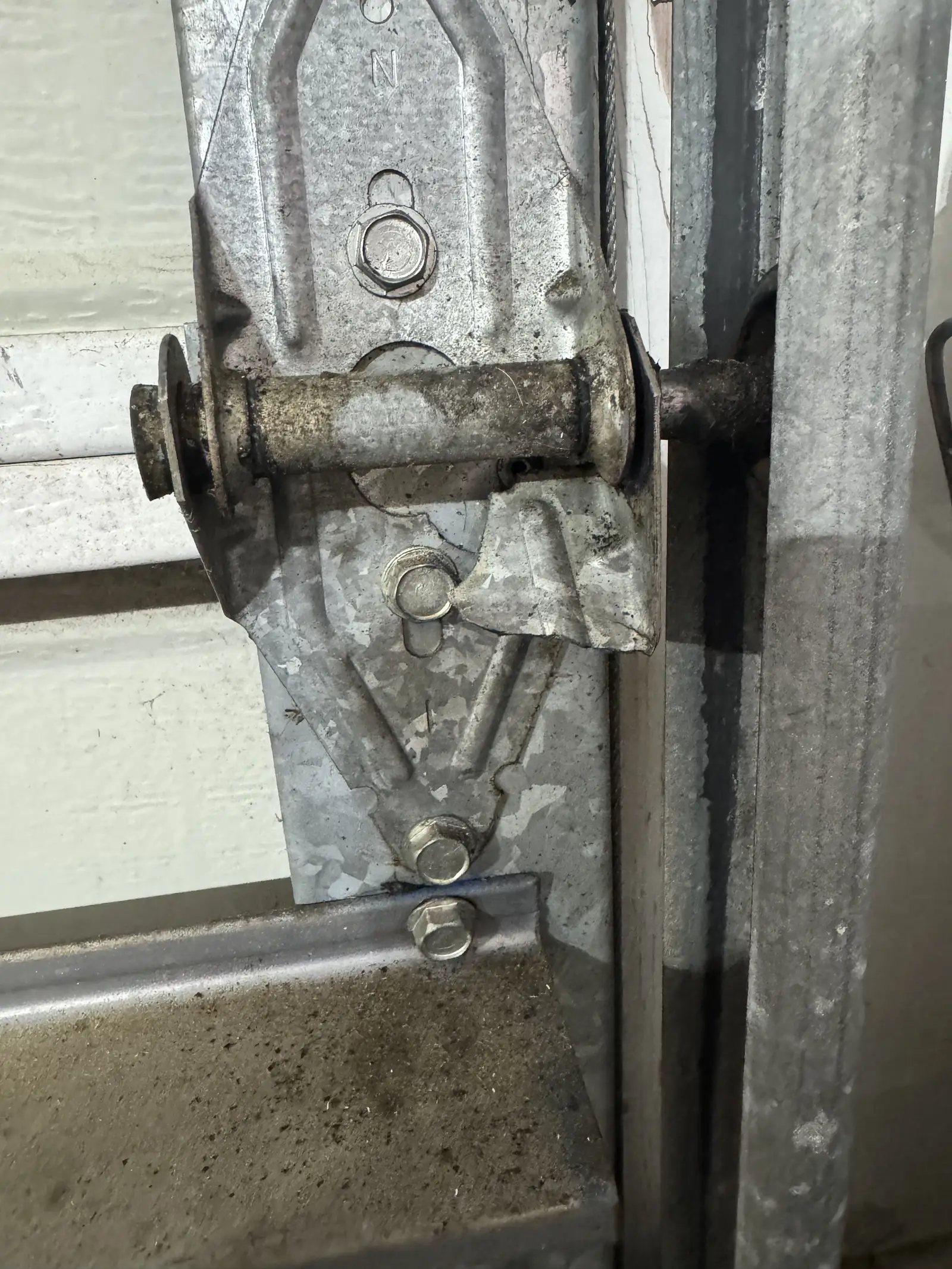
This is the most common cause of a loud door. Basic metal rollers wear out, wobble in the track and grind or bang as the door moves. Cracked plastic wheels and bent stems do the same. Replacing worn rollers with quieter, better-quality ones is often the biggest single improvement you can make.
2. Dry hinges, bearings and springs
Metal-on-metal parts squeak when they're dry, especially in hot Texas summers. A garage-door lubricant on the hinges, roller bearings and springs often quiets them right down.
What you can do: use a garage-door spray lubricant (not a heavy grease) on the hinges, the roller bearings and the springs. Don't grease the tracks. Rollers should roll in a clean track; grease just collects dirt.
3. Loose hardware
A garage door vibrates every time it runs, and over time the nuts and bolts on the hinges and track brackets work loose. That causes rattling and can let the track shift.
What you can do: snug up loose hinge and track bracket bolts. Never loosen or adjust anything on the springs, the cables, or the brackets at the bottom corners of the door. They're under high tension.
4. The opener
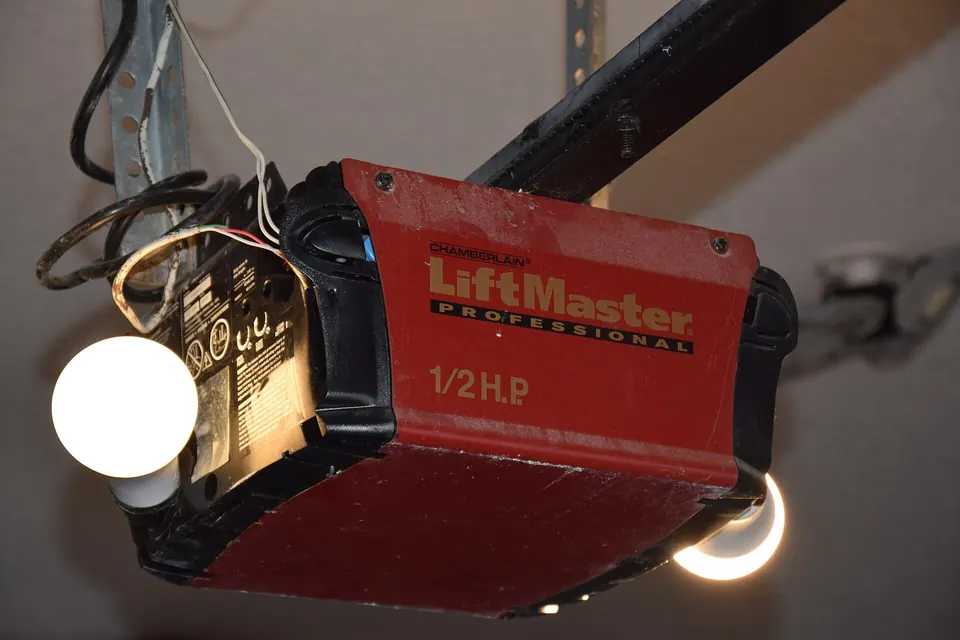
Older chain-drive openers with AC motors are loud by design. A sagging chain slaps against the rail, and worn gears inside the opener grind and whine. If the opener is the loudest part of the door, a modern belt-drive LiftMaster with a DC motor is dramatically quieter.
5. A door that's out of balance
If the springs are weak, the opener works much harder to lift the door, which means more strain and more noise. To test the balance, close the door, pull the red emergency release cord only while the door is fully closed, then lift the door by hand to about waist height and let go. (If it's very heavy or won't budge, stop. That's usually a broken spring.) A balanced door stays put. If it drops or shoots up, the springs need adjusting or replacing, and that's a job for a pro. Close the door and run the opener again to reconnect it.
When noise means stop
Stop using the door and call if you hear a loud bang, the door suddenly feels heavy, it rides crooked, or a cable looks loose. Those are signs of a broken spring or cable, and the door can fall.
Noisy Garage Door Questions
Will WD-40 quiet my garage door?
Regular WD-40 is mostly a cleaner, not a long-lasting lubricant. A spray lubricant made for garage doors (silicone or lithium) works better and lasts longer.
Should I lubricate the garage door tracks?
No. Keep the tracks clean, but don't grease them. Lubricate the hinges, roller bearings and springs instead.
How much does it cost to fix a noisy garage door?
It depends on the cause. Often it's new rollers and a tune-up. A one-time GGS tune-up is $189, and you'll get an upfront quote for any parts before work begins.
Is a belt-drive opener quieter than a chain drive?
Yes, noticeably, especially with a modern DC motor. See opener repair & installation.
Tired of the noise?
Call or text (979) 587-6320 to get your garage door running quietly again.